

- Content
In September 2026, an apartment in Cyprus generated an average annual gross rental yield of 5.14%, according to Global Property Guide. Compared with the figures often promised in advertisements, this may seem modest, but it reflects a stable market with relatively clear rules. The key question for investors is different: how much will remain after taxes, vacancy periods, and maintenance costs? Let’s explore how property investment in Cyprus works in 2026, where to look for a suitable property, and which legal details to check before paying a deposit.
Why Is Property in Cyprus Attractive to Investors?
Cyprus does not attract investors because of record-breaking yields, but because it combines several factors that rarely come together in one place. Demand is supported by two main groups: local residents and tourists. This means rental property in Cyprus can be let under different arrangements, allowing investors to change their strategy without selling the property. Add EU membership, the euro, and a legal system based on English law, and it becomes clear why the island appeals to cautious investors.
Stable Demand for Rental Housing
Demand for long-term rentals comes from several established groups: employees of international companies that have relocated offices to Limassol and Nicosia, students attending local universities, and families who have moved to Cyprus permanently. New construction has struggled to keep pace with this demand, which has continued to push rental prices up.
According to the RICS and KPMG index, rental rates increased in both the first and second quarters of 2026, with apartments outperforming other property segments. Rising rents improve prospects for landlords, although the ability to revise rent depends on the lease terms and the applicable legal framework. Even in a high-demand market, investors should allow time to find a new tenant.
Tourist Arrivals and Their Impact on the Rental Market
In 2025, Cyprus welcomed 4.53 million tourists, an increase of 12.2% compared with the previous year, according to the Statistical Service of Cyprus (CYSTAT). However, 2026 began unevenly: tourist arrivals fell by 10.1% in the first half of the year, and the decline had slowed to 7% by the end of the first eight months.
Tourists began taking shorter trips but spending more. At the same time, overnight stays booked through Airbnb, Booking, and Expedia increased by 22.3% in the first quarter, one of the strongest results in the EU, according to Eurostat. The takeaway is simple: tourist demand has not disappeared, but it would be risky to base your financial projections on the record occupancy levels of previous years.
Short-Term vs. Long-Term Rentals: Which Is More Profitable?
Short-term rentals allow owners to benefit from peak summer rates, but they also turn an apartment into a small hospitality business involving cleaning, check-ins, and guest reviews. An annual lease generates less income but provides a steadier cash flow and requires relatively little involvement from the owner beyond occasional calls. The deciding factor is not the rental model itself, but the annual occupancy rate of the specific property. A detailed comparison of yields and risks is provided below.
Key Advantages of Investing in Cypriot Real Estate
Investors considering property in Cyprus have several significant legal and economic advantages to consider:
- Property can be rented out by owners of any nationality, and transactions are handled through a centralised Land Department.
- There has been no annual immovable property tax since 2017, and stamp duty and the Special Defence Contribution on rental income were abolished from 2026.
- Purchasing a new property for at least €300,000, excluding VAT, is one of the qualifying routes to permanent residency.
- Cypriot law is based on English law, and contracts can be drawn up in English.
- Apartment prices rose by 10.8% year-on-year, according to the Central Bank of Cyprus property price index for Q1 2026.
Capital appreciation is not guaranteed, so rental income should remain the primary basis for an investment decision. Any increase in the property’s value is an additional benefit that may be realised when it is eventually sold.

Which Cities in Cyprus Offer the Best Rental Property Investment Opportunities?
Property prices in Cyprus can vary by almost twofold depending on the city. According to INDEX.cy, as of September 2026, the average price per square metre is approximately €5,000 in Limassol, €4,000–€4,200 in Paphos, and around €3,000 in Larnaca. However, a lower price per square metre does not automatically mean a higher rental yield. What matters is the relationship between the purchase price and the achievable rent.
Limassol
Limassol remains the island’s most expensive city and its main corporate hub. A one-bedroom apartment costs an average of €275,000, a two-bedroom apartment €445,000, and a three-bedroom apartment approximately €750,000 (Global Property Guide, September 2026).
Long-term rental demand is driven by employees in fintech, IT, and shipping companies. A one-bedroom apartment rents for approximately €1,450 per month. Limassol has the highest average gross rental yield in Cyprus, at 5.38%. Newly built apartments with parking in the city centre, near the marina, and in Germasogeia are particularly attractive to tenants.
Paphos
Paphos has historically attracted foreign residents. It has a long-established British community and, in recent years, has become popular with retirees and families from EU countries.
A one-bedroom apartment costs around €235,000 and rents for approximately €1,100 per month, giving the city an average rental yield of 5.33%. Interestingly, three-bedroom apartments generate a yield of 5.5%, higher than that of two-bedroom properties, because families are keen to rent them for longer periods.
The airport and the UNESCO archaeological park help extend the tourist season, making short-term rentals in Kato Paphos and Chloraka attractive beyond the summer months.
Larnaca
Larnaca offers the most affordable entry point into Cyprus’s coastal property market: the price per square metre is approximately 40% lower than in Limassol.
Rental demand is supported by the international airport, the redevelopment of the port and marina, and professionals who work in Nicosia but prefer to live by the sea. Gross rental yields generally range from 4% to 5%, around the island’s average rather than above it.
However, Larnaca leads in capital appreciation. Apartment prices rose by 11.7% year-on-year, and in the second quarter of 2026, the RICS and KPMG index recorded the strongest price growth for resort apartments in the city.
Nicosia
Tourism plays a relatively small role in the capital, which can be an advantage for conservative investors: the market is driven primarily by long-term rentals.
Tenants include civil servants, employees of banks and law firms, and students at the University of Cyprus and the University of Nicosia. A one-bedroom apartment costs approximately €148,000 and rents for around €650 per month, giving the city an average yield of 4.72%.
Nicosia recorded the highest number of resale transactions on the island in the first half of 2026, making it the most active market by this measure. Investors should consider studios and one-bedroom apartments near university campuses.
Ayia Napa and Protaras
The eastern coast relies almost entirely on tourism and is characterised by pronounced seasonality. From June to September, an apartment costs an average of €210–€225 per night to rent, and available dates are scarce. From November to March, however, many complexes are largely empty.
Occupancy estimates vary considerably depending on the methodology used. Different services analyse different listing samples, which is why AirDNA estimates occupancy in Ayia Napa at around 60%, while BnbCalc puts it at approximately one-third of nights. A conservative estimate is advisable when calculating potential returns.
According to BnbCalc, the average property generates approximately €23,000 in annual revenue, most of which comes from the four summer months. Consequently, profitability depends heavily on performance during the low season.
Which Type of Property Should You Choose for Rental Income in Cyprus?
The type of property affects your final return just as much as the city. When selecting rental property in Cyprus, start with the prospective tenant: identify who is likely to live there, then choose the appropriate layout.
Studio Apartments
Studios remain the most affordable way to enter the market. In Nicosia and Larnaca, they can be found for less than €150,000.
The main tenants are students and single professionals who value proximity to a university or office. Although rent per square metre can be high, tenants tend to change more frequently, and each turnover brings advertising and minor refurbishment costs. Studios also tend to appreciate more slowly and may take longer to sell if the investor decides to exit the market.
One- and Two-Bedroom Apartments
Apartments with one or two bedrooms represent the most versatile segment of Cyprus’s rental market. They appeal to couples, young families, and remote workers who need a separate room for a home office.
In Limassol and Nicosia, these properties offer some of the highest yields within their respective markets: 5.7–6.3% and 4.6–5.3%, respectively. Their broad tenant base helps reduce vacancy periods, and they generally attract buyers more quickly when resold.
Penthouses and Luxury Apartments
Penthouses and premium apartments target a narrower audience, including international executives, affluent people relocating to Cyprus, and diplomats. Monthly rents can be impressive, but percentage yields tend to be lower than those of smaller apartments.
The main risk is vacancy. It can take several months to find a tenant with the appropriate budget, and every vacant month can cost the owner thousands of euros. In return, premium properties in prime locations tend to be more resilient during market downturns.
Seaside Villas
Villas are generally purchased for short-term rentals to families and groups of friends. Properties with four or more bedrooms in the Ayia Napa area generate average annual revenue of €37,000–€38,000, more than any other property type at the resort.
However, expenses are higher too. Pools require year-round maintenance, gardens need watering, and cleaning a large house after each guest stay costs significantly more than cleaning an apartment.
Before purchasing, check whether the specific villa can be registered as tourist accommodation and whether any modifications will be required.
New Builds vs. Resale Properties
The first sale of a new property by a developer is generally subject to 19% VAT but exempt from transfer fees. The opposite applies to resale properties: VAT is not charged, but property transfer fees are payable.
New builds typically require less investment in the first few years and may qualify for permanent residency, although they are not immune to construction defects. Resale properties are generally cheaper, are often located in established neighbourhoods, and allow investors to review the property’s actual rental history.
The developer’s warranty obligations should be clearly stated in the contract. In both cases, checking the title deed should be a priority, as title deeds in Cyprus are sometimes issued several years after construction is completed.
Rental Yields on Property in Cyprus
Rental yields in Cyprus should be calculated based on the total investment rather than the advertised purchase price. The difference between these two approaches can easily reduce the yield by one percentage point or more. The example below illustrates how an advertised yield of 6% can translate into an actual return of 3.95%.
How to Calculate Your Investment Yield
The formula is straightforward: divide annual rental income by the total acquisition cost and multiply by 100%.
Consider an apartment costing €200,000, with an additional €15,000 for fees, legal services, furniture, and appliances. The total investment is €215,000.
At a monthly rent of €1,000, annual rental income would be €12,000, resulting in a gross yield of 5.58%. If calculated using only the advertised purchase price, the yield would be exactly 6% — the figure buyers typically see in advertisements.
Gross vs. Net Rental Yield
Gross yield measures rental income before expenses, while net yield reflects what the owner actually retains.
Suppose taxes, maintenance, insurance, and one month of vacancy cost €3,500 over the year. The remaining income would be €8,500, reducing the net yield to 3.95%.
According to Global Property Guide, the difference between gross and net yields in Cyprus is typically 1.5–2 percentage points.
Which Expenses Should You Include?
To calculate the actual return, deduct six categories of expenses from rental revenue. Some are ongoing, while others depend on the rental model:
- Taxes: income tax and contributions to the General Healthcare System (GeSY).
- Utilities: tenants usually pay these under long-term leases, while owners typically cover them for short-term rentals.
- Property management: short-term rental management companies charge 15–25% of revenue.
- Repairs and maintenance: building management fees, air-conditioning servicing, and repainting.
- Agency commission: finding a long-term tenant usually costs the equivalent of one month’s rent.
- Vacancy periods: each vacant month reduces annual income by approximately 8%.
The rental agreement should clearly specify which expenses are the landlord’s responsibility and which are paid by the tenant. Otherwise, a dispute over an electricity bill could end up costing more than the bill itself.
Property Payback Period in Cyprus
A simple payback period is calculated by dividing the total investment by the annual net income.
In our example, €215,000 divided by €8,500 gives a payback period of approximately 25 years.
An increase in the property’s value does not shorten this period based on rental income alone, but it changes the overall investment outcome: if the property appreciates, the investor can also earn a profit on resale. Conversely, mortgage costs, major repairs, or prolonged vacancy can extend the payback period by several years.
Short-Term vs. Long-Term Rentals: Which Should Investors Choose?
The choice of rental model affects not only your income but also your legal obligations as a property owner. Tourist rentals and annual leases in Cyprus are regulated differently, and mistakes can result in fines. It is best to choose your strategy before purchasing, as it affects both property requirements and tax reporting.
Key Requirements for Short-Term Rentals
Any accommodation rented to tourists must be registered with the Deputy Ministry of Tourism under Law 34(I)/2019, regardless of the owner’s nationality. The registration number must appear in every listing.
Since 20 May 2026, EU Regulation 2024/1028 has also applied: platforms must request this number and transmit accommodation data to the authorities.
Enforcement is becoming stricter. In spring 2026, the Cyprus Audit Office identified listings that did not appear in any register, and the ministry was preparing new legislation on short-term rentals.
The tax treatment of this income depends on the rental arrangement. If the owner provides additional services to guests, the income may be classified as business income. We recommend discussing the appropriate structure with a lawyer in advance.
Advantages of Long-Term Rentals
An annual lease does not require tourist accommodation registration and eliminates the need for frequent cleaning, check-ins, and guest correspondence. Tenants usually pay for electricity and water, while the owner receives a fixed amount every month.
The lease should clearly specify the security deposit, rent adjustment arrangements, responsibility for minor and major repairs, and the conditions under which either party may terminate the agreement early. The more comprehensive the contract, the lower the risk of a dispute ending up in court.
Comparing Returns and Risks
In a desirable resort location, short-term rentals can generate higher gross revenue. However, the difference narrows after accounting for platform commissions, property management, cleaning, and winter vacancies.
Long-term rentals in major cities typically generate gross yields of 4–6%, with relatively low volatility. They have their own risks, including late payments, property damage, and the difficulty of evicting an uncooperative tenant.
Short-term rentals make sense when the property is occupied for most of the year and the owner is prepared to invest time in management or pay a professional manager.
Choosing a Strategy Based on the City
In Limassol and Nicosia, annual leases are generally the stronger option because corporate tenants are plentiful and tourism plays a secondary role.
In Ayia Napa and Protaras, investors tend to focus on holidaymakers, as finding long-term tenants for resort apartments can be more difficult.
Paphos and Larnaca offer opportunities to combine both models: rent the property short-term from May to October, then sign a six- or seven-month lease with relocating professionals or students for the winter. This approach can smooth out seasonal fluctuations, but it requires flexibility and careful scheduling.
How Much Does Investment Property in Cyprus Cost?
Your budget determines not only the city and property type but may also affect your immigration options. The figures below are based on asking prices and are intended as a guide for your search, not as guaranteed transaction prices. The final price after negotiation and document checks is often lower.
Budget of Up to €150,000
In this price range, the main options are studios and one-bedroom apartments in Nicosia and Larnaca, mostly on the resale market. The average price of a one-bedroom apartment in Nicosia, approximately €148,000, fits this budget.
There are very few options in Limassol at this price, while similar properties in Paphos are generally found on the outskirts. Older buildings are more common in this segment, making it especially important to check title deeds, permits, and the property’s technical condition.
Investments of €150,000–€300,000
This is the main working segment of the Cypriot property market. The budget is sufficient for a one-bedroom apartment in Paphos (approximately €235,000) or Limassol (approximately €275,000), a two-bedroom apartment in Nicosia (approximately €235,000), or most options in Larnaca.
This price range offers some of the best opportunities to balance purchase cost, tenant demand, and rental yield.
When buying from a developer, remember to account for VAT. If the price is quoted excluding tax, an apartment listed at €250,000 could cost nearly €300,000 after VAT.
Investments of €300,000 and Above
At this level, buyers can consider two-bedroom apartments in Limassol, penthouses, and seaside villas.
A new property costing at least €300,000 excluding VAT may also qualify as a basis for permanent residency under the fast-track procedure. However, the purchase alone is not sufficient: the applicant must demonstrate a stable income from abroad, and payment for the property must come from an account outside Cyprus. More details about the programme are available in our article on the Cyprus Golden Visa.
How Your Budget Affects Potential Returns
As a general rule, the more expensive the property, the lower the percentage yield.
Limassol illustrates this clearly: a one-bedroom apartment generates a gross yield of 6.3%, a two-bedroom apartment 5.7%, and a three-bedroom apartment just 4.2%.
On the other hand, expensive apartments in prime locations tend to be more resilient during market downturns and attract tenants with greater purchasing power. The best choice depends on your objective: generating regular income or preserving capital.
Taxes and Costs When Buying Property in Cyprus
A major tax reform came into effect in Cyprus on 1 January 2026, introducing several significant changes for owners of rental properties. All information below is current as of October 2026.
Your overall tax burden depends on your status: whether you are a Cyprus tax resident, a tax resident with non-dom status, or a non-resident receiving rental income in Cyprus only. Our article on tax residency in Cyprus explains the residency requirements in more detail.
Tax Obligations for Property Owners
Cyprus has not levied an annual immovable property tax since 2017. Property owners pay only municipal charges for waste collection and sewerage.
When a property is sold, capital gains tax is charged at 20%, although the reform increased the lifetime exemption to €30,000.
Tax residents aged 25 to 70 are now required to file an annual TD1 tax return, even if they have no taxable income. Non-residents pay tax only on income from Cyprus sources, including rental income.
Taxation of Rental Income
One of the main changes introduced by the reform is the abolition of the Special Defence Contribution (SDC) on rental income. Previously, it accounted for approximately 2.25% of rental payments.
Now, only 80% of rental receipts are taxable, as an automatic 20% deduction is applied. Progressive income tax rates ranging from 0% to 35% then apply to that amount.
No income tax is due if an individual’s total taxable annual income does not exceed €22,000. An additional GeSY contribution of 2.65% is payable on rental receipts.
Non-dom status no longer provides a tax advantage for rental income, although it remains relevant to dividends and interest. If the property is owned by a Cypriot company, the profits are subject to corporation tax at 15%.
VAT and Property Transfer Fees
The standard VAT rate on new builds is 19%. The reduced rate of 5% applies only to the first 130 m² of a person’s primary residence, valued at no more than €350,000. This means it is not available for properties purchased for rental purposes.
Resale properties are not subject to VAT, but transfer fees apply. The rates are 3% on the first €85,000, 5% on the portion up to €170,000, and 8% on the amount above that threshold, with a permanent 50% discount.
For a property costing €250,000, the transfer fee would be €6,600. If there are two buyers, the price is divided between them and the fee is calculated using the lower applicable bands. You can calculate your own amount using a transfer fee calculator.
Additional Costs of Buying and Owning Property
Legal fees typically amount to 1–2% of the purchase price, with a minimum of €2,500–€3,500 plus VAT.
Filing the sale agreement with the Land Department costs €50. Stamp duty was abolished for agreements signed from 1 January 2026, so the implications for earlier agreements should be checked separately.
Owners must also budget for insurance, building management fees, and bank account maintenance charges for the account used to receive rental payments.
How to Buy Rental Property in Cyprus
To buy rental property in Cyprus without unpleasant legal surprises, it helps to divide the process into six stages. Each step builds on the previous one, and skipping due diligence in pursuit of a bargain is not advisable. The process typically takes one to three months, provided the property’s documentation is in order.
Establishing Your Investment Budget
Start with the total cost of ownership, not the advertised purchase price.
In addition to the property itself, budget for VAT on a new build or approximately 3–6% for transfer fees, legal services, and furniture when buying a resale property.
Set aside a separate reserve for the first two or three months, as this is roughly how long it may take to find a tenant and carry out minor repairs.
If you are financing the purchase with a mortgage, be prepared for the Cypriot bank to examine the source of your deposit funds in detail.
Choosing a City and Neighbourhood
Determine your rental strategy first, then select the neighbourhood.
For long-term rentals, proximity to offices, schools, and public transport is important. For short-term rentals, consider the beach, restaurants, and travel time from the airport.
Compare rental rates at neighbourhood level rather than relying on citywide averages. Even within Limassol, prices can vary significantly between districts.
A useful test is to find five to ten active listings for comparable apartments within a one-kilometre radius.
Analysing Potential Rental Yields
A listing shows the asking rent, not the actual income an owner can expect.
Check how long similar apartments have been advertised. If they have remained listed for more than a month, the asking rent may be too high.
If a developer promises “guaranteed rental income,” find out who is paying it, how long the guarantee lasts, and whether the cost has been built into an inflated purchase price.
Only then should you recalculate the yield using realistic figures rather than advertising projections.
Checking the Property’s Legal Status
A lawyer will obtain information from the Land Department about ownership, mortgages, court-ordered attachments, and other encumbrances. They will also check the building permit and certificate of completion.
The absence of a separate title deed is common with new developments and does not automatically make a purchase impossible. However, it is essential to confirm that the seller has the legal right to sell the property and that the land is not mortgaged to the developer’s bank.
At Almanova Law, these checks are carried out before a deposit is paid, because correcting problems after payment can be far more expensive.
Completing the Transaction
After due diligence, the parties sign the sale agreement and submit it to the Land Department.
This is a key step in protecting the buyer: a deposited sale agreement prevents the seller from selling or mortgaging the property again.
Buyers from non-EU countries must also obtain permission from the district administration. The law limits the number and area of properties they may acquire.
The terms of the transaction should be discussed with a lawyer in advance. More information about legal support during property purchases is available on our service page.
Preparing the Property for Rental
Before letting the property, obtain a Tax Identification Code (TIC), register for TaxisNet, arrange insurance, and open a bank account for rental payments.
Furnish the apartment for your target tenant. An office worker may prioritise a dedicated workspace and fast internet, while a tourist will expect air conditioning and a fully equipped kitchen.
For short-term rentals, register the property with the Ministry of Tourism before publishing the first listing.
It is also advisable to have a lawyer prepare or review a long-term tenancy agreement rather than downloading a generic template from the internet.

What Are the Risks of Investing in Cypriot Property?
Cyprus is generally considered a stable property market, but investing in Cypriot real estate has its vulnerabilities. Most can be assessed in advance if you consider the full year rather than focusing on the best month. Here are five risks that can turn an apparently profitable purchase into a loss-making investment.
Seasonal Demand
A property in a resort can generate strong profits in summer and operate at a loss from November to March.
Seasonality is particularly pronounced in Ayia Napa and Protaras. On the AirDNA scale, these markets score 44–45 out of 100, where a higher score indicates more consistent demand.
Cities have their own seasonal cycles too. In Nicosia, students leave during the summer and return in September. Build your financial model around average annual occupancy and maintain a reserve to cover two or three weaker months.
Property Price Fluctuations
Years of rising prices have conditioned the market to expect growth, but the 2013 banking crisis demonstrated that property prices in Cyprus can also fall.
Values depend on interest rates, foreign capital inflows, and regional conditions. The decline in tourist arrivals in spring 2026 was another reminder of how sensitive the resort segment can be to external events.
Expensive properties and locations that rely almost entirely on tourism are generally more exposed to fluctuations.
Vacancies Between Tenants
Even a property in high demand will usually remain empty for some time between tenants.
Finding a new tenant, cleaning, carrying out minor repairs, and arranging the next rental typically takes between two weeks and one month.
Smaller apartments in popular neighbourhoods tend to find tenants fastest, while larger and more expensive properties can remain vacant for longer.
One simple way to reduce the gap is to start looking for a new tenant one month before the current lease expires.
Property Maintenance Costs
Sea air and heat can quickly wear out air-conditioning units, metal structures, and building facades.
In older buildings, maintenance contributions for common areas can be substantial, while major works such as roof or lift replacement may have to be funded by apartment owners.
Building safety is another consideration. In April 2026, a building collapsed in Germasogeia after local authorities had declared it unsafe in March, despite registered short-term rental properties operating there.
Before buying in an older building, it is sensible to commission an independent technical inspection.
Legal and Tax Risks
The most expensive mistakes are often legal ones: undisclosed encumbrances, missing permits, or poorly drafted tenancy agreements.
In buildings constructed before the end of 1999 in areas covered by rent-control legislation, tenants may qualify for protected status under certain conditions, making eviction difficult.
Non-residents must also consider their tax obligations in their country of residence and the applicable double taxation agreement.
A preliminary consultation with a lawyer costs considerably less than correcting these mistakes later.
How to Improve Rental Yields in Cyprus
You can increase rental yields in Cyprus without raising the rent. In many cases, reducing vacancy periods and unnecessary expenses is more effective. Here are five ways to improve returns across the island’s property market.
Choosing the Right Location
Location affects achievable rent more than almost any renovation.
For long-term rentals, tenants value walking distance to offices, schools, and supermarkets. For short-term rentals, proximity to beaches and restaurants is more important.
Being close to the sea, a university, or a business district can increase both rental income and resale value.
Before completing the purchase, walk the route from the property to nearby amenities as a prospective tenant would.
Buying a Property with Strong Rental Demand
The most marketable properties appeal to the widest range of tenants.
In Cyprus, these are often one- and two-bedroom apartments with parking, a balcony, and air conditioning in every room.
Unusual layouts, ground-floor apartments without a private outdoor area, and buildings without lifts can narrow the tenant pool and lengthen vacancy periods.
A good sign of strong demand is when comparable apartments in the neighbourhood are rented out within one or two weeks.
Renovation and Furnishing
Renovations pay off when they meet tenant expectations rather than simply reflecting the owner’s taste.
In Ayia Napa, air conditioning appears in 96% of listings, kitchens in 95%, washing machines in 83%, and swimming pools in nearly three out of four listings.
Without these basic amenities, a property may lose out to competitors before tenants even compare prices.
For long-term rentals, reliable appliances and fast internet are generally more important than designer furniture.
Professional Property Management
A management company takes a percentage of rental revenue but handles tenant searches, check-ins, cleaning, and minor repairs.
For owners living outside Cyprus, professional management is often the only practical solution.
When choosing a company, check whether it has experience registering properties with the Ministry of Tourism and how it reports expenses.
It is also advisable to have a lawyer review the management agreement. It should specify responsibility for damage and the procedure for terminating the contract.
Dynamic Pricing for Short-Term Rentals
Setting a fixed nightly rate is one of the most common ways to miss out on potential income.
According to BnbCalc, weekend occupancy in Ayia Napa is approximately 11% higher than on weekdays, and guests book an average of 40 days in advance.
This means you can charge more for Friday and Saturday nights and reduce rates for unbooked dates as the stay approaches, rather than losing the booking altogether.
Dynamic pricing services can automate these adjustments based on competitors’ rates.
How to Choose Investment Property in Cyprus
Choosing investment property in Cyprus is different from buying a home for yourself. Personal taste is secondary; the key considerations are the numbers, legal status, and resale liquidity.
Investor’s Checklist Before Buying
Before paying a deposit, work through this checklist. If you cannot obtain a clear answer to even one of these questions, consider postponing the transaction:
- Is there a separate title deed, or is there a clear timeframe for its issuance?
- Are there any mortgages, court-ordered attachments, or outstanding building management fees?
- Does the property comply with the building permit?
- What are comparable apartments renting for within a one-kilometre radius?
- Can the property be registered for short-term rentals?
- What taxes will apply to rental income and a future sale?
- Will you be able to prove the source of funds to the bank?
The first three questions are addressed through legal due diligence; the remaining ones require the investor’s own financial analysis.
The checklist takes a couple of days to complete but can help prevent years of problems.
Property Features That Affect Rental Value
Four characteristics have the greatest impact on achievable rent:
- Distance to the sea, a university, or a business district;
- Parking, a lift, and air conditioning in every room;
- A balcony or terrace, and for resort properties, a pool and a view;
- The building’s age and energy efficiency.
The floor level, finishes, and developer’s reputation also matter, but generally to a lesser extent.
Energy efficiency has become increasingly important. Summer air-conditioning bills in older buildings can be significantly higher, and tenants take this into account.
How to Assess Actual Rather Than Advertised Rental Yields
Advertised yields are usually based on summer rates, full occupancy, and prices before taxes and expenses.
To calculate a realistic return, use the average annual rental rate, deduct vacancy losses, taxes, management fees, and maintenance costs, and then divide the remaining income by the total acquisition cost.
If the property is already rented out, ask the seller for documented rental income over the previous year.
If the net yield is below 3%, it is worth comparing the investment with other available options.
Is Investing in Rental Property in Cyprus Worth It?
There is no universal answer, but Cyprus can be a good fit for certain investment objectives.
If you view Cypriot real estate as a 10–15-year investment, the island offers a combination of rental income, potential capital appreciation, and a relatively transparent tax system. The question is whether these advantages align with your goals and budget.
Who Is This Investment Strategy Suitable For?
This strategy suits investors looking for a relatively conservative euro-denominated asset and willing to hold it for the long term.
They may include entrepreneurs diversifying their capital within the EU, families planning to relocate, and investors considering permanent residency.
Cyprus is less suitable for those expecting to make a quick profit through resale, as taxes and transaction costs can significantly reduce the returns from a short-term deal.
You should also honestly assess whether you are prepared to manage the property yourself or pay a professional manager.
What Is the Ideal Starting Budget?
A comfortable starting budget is €150,000–€250,000, with an additional 10–15% set aside for fees, furnishing, and unexpected expenses.
This amount is sufficient to purchase a marketable apartment in Nicosia, Larnaca, or Paphos that can be rented out relatively easily and sold if necessary.
Entering the market without a financial reserve is risky: even a short vacancy or an unexpected repair will have to be paid for out of pocket.
If your budget exceeds €300,000, decide in advance whether permanent residency is one of your goals, as this may influence your property choice.
Which Properties Have the Greatest Investment Potential?
For long-term rentals, one- and two-bedroom apartments in Limassol and Nicosia offer particularly promising prospects. Stable demand from corporate tenants and students helps reduce vacancy periods.
Investors focused on capital appreciation should consider new developments in Larnaca, which currently leads in price growth.
In resort areas, properties with a swimming pool near the sea tend to perform best, but only if winter occupancy is estimated realistically.
Ultimately, rental property in Cyprus makes financial sense when the numbers still work after all expenses have been accounted for, rather than only at the advertising stage.
FAQ: Investing in Property in Cyprus
Is buying property in Cyprus for rental income profitable?
Yes, provided you assess the return after all expenses. Net rental yields in Cyprus are generally around 3–4% per year, with potential capital appreciation providing additional upside. This is a conservative, long-term investment strategy rather than a way to make quick money.
Which type of property in Cyprus is best for investment?
A versatile option is a one- or two-bedroom apartment in an area with consistent rental demand. Such properties attract couples, families, and professionals, which generally helps reduce vacancy periods. They are also usually easier to resell when necessary.
Where in Cyprus are rental yields highest?
As of September 2026, Limassol has the highest average gross rental yield in Cyprus at 5.38%, followed by Paphos at 5.33% and Nicosia at 4.72%, according to Global Property Guide. Actual returns can vary considerably from one property to another.
Which is more profitable: short-term or long-term rentals?
In resort areas, short-term rentals can generate higher income if the property is occupied for most of the year. In Limassol and Nicosia, long-term leases with corporate tenants are generally more reliable. For owners living abroad, long-term rentals are usually simpler and less demanding to manage.
How much money do I need to invest in property in Cyprus?
The minimum budget is approximately €120,000–€150,000 for a studio or one-bedroom apartment in Nicosia or Larnaca. You should also allow for 3–6% in fees, legal costs, and furnishing expenses, or VAT when buying a new build. For the permanent residency route described in this article, the property must cost at least €300,000 excluding VAT.
What taxes does a rental property owner pay?
Income tax applies to 80% of rental income under the progressive tax bands when the applicable annual taxable income exceeds €22,000. A GeSY contribution of 2.65% is also payable on rental receipts, while capital gains tax of 20% applies when the property is sold. The Special Defence Contribution on rental income is no longer payable from 2026.
Can I buy property in Cyprus remotely?
Yes. A transaction can be completed through a notarised power of attorney without the buyer being physically present. Almanova Law can check the property, sign the agreement on the client’s behalf, and submit it to the Land Department. The buyer will still need to complete identification procedures and provide evidence of the source of funds.
How long does it take for property in Cyprus to pay for itself?
Based on rental income alone, the payback period is approximately 25–30 years at a net yield of 3.5–4%. Capital appreciation does not shorten the rental-income payback period but can increase the overall profit when the property is sold. Mortgage costs, renovations, and vacancies may extend the period by several more years.
Data Sources
- Rental yields and city-level prices — Global Property Guide, September 2026.
- Property prices per square metre by city — INDEX.cy Insights.
- Central Bank of Cyprus property price index (+10.8%; Larnaca +11.7%) — Developers Cyprus, citing RPPI Q1 2026.
- RICS/KPMG property index — Q1 2026 and Q2 2026.
- Resale market, first half of 2026 — Cyprus Mail.
- Tourist arrivals in 2025 — CNA / CYSTAT; first-half 2026 decline of 10.1% — FastForward; eight-month decline of 7% — Cyprus Mail; tourist spending — Cyprus Mail.
- Overnight stays booked through platforms, up 22.3% — Politis / Eurostat.
- Short-term rental register, Audit Office findings, and building collapse in Germasogeia — Politis, dom.com.cy.
- Ayia Napa occupancy — AirDNA, BnbCalc.
- 2026 tax reform — International Tax Review, EY, RSM (rental income, GeSY).
- VAT and property transfer fees — INDEX.cy.

Elina Almanova
Advocate
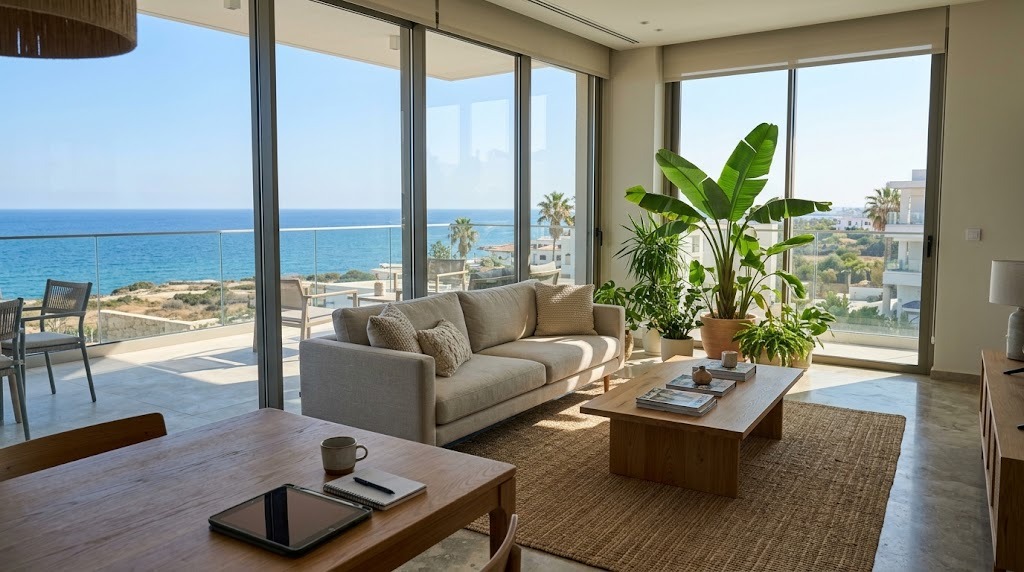
Investing in rental property in Cyprus: prices, rental yields, taxes, property selection, and the best cities for profitable investments.